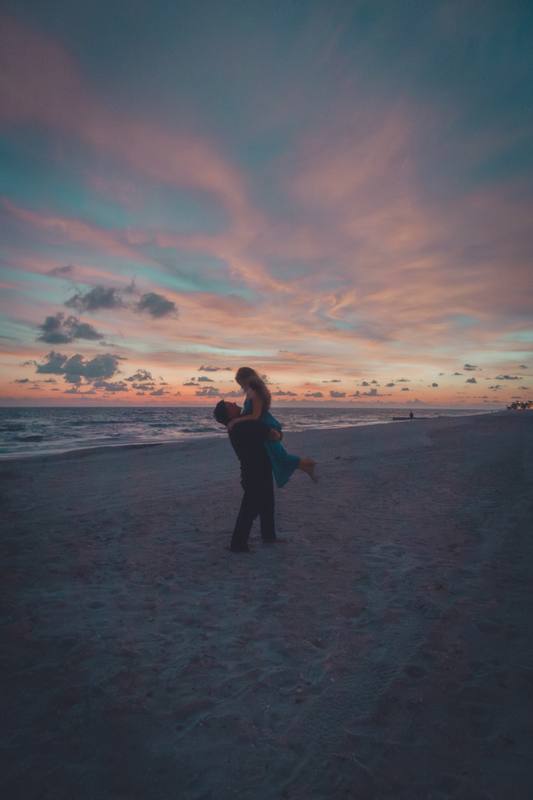
Almost every couple we shoot says the same thing in the first five minutes. "We don't know what to do with our hands."
Good. That's normal. Posing for photos is a weird, invented, slightly cringey thing. Pretty much nobody is naturally good at it on the first try.
The fix isn't memorizing 50 poses from Pinterest. The fix is understanding what we're actually trying to capture, then giving you four reliable moves that handle most situations.
What we're actually capturing
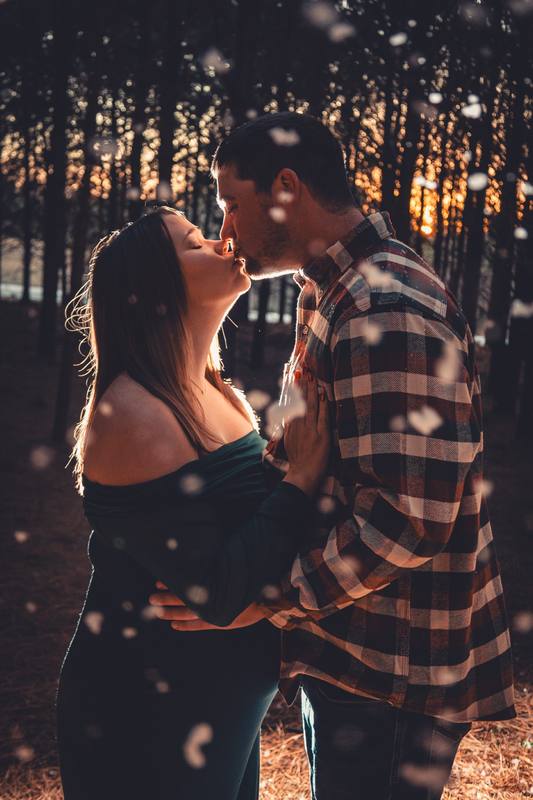
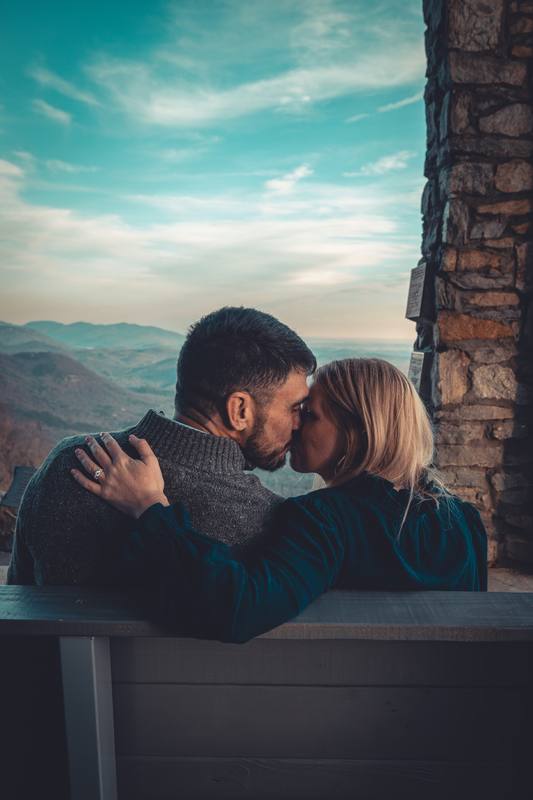
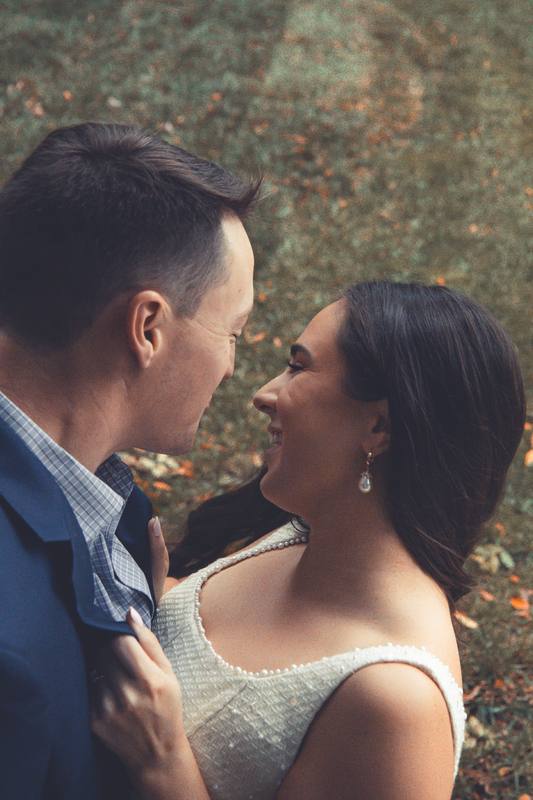
Connection. That's the whole thing.
The frames that hold up ten years from now aren't the ones where you nailed the pose. They're the ones where you forgot the camera was there for half a second.
So our job as the shooter is to create the conditions for those moments. Your job is to be willing to look at each other instead of the camera, walk around, talk, laugh, and let us catch what happens.
The four moves
Move one. Walk and talk. Holding hands. We say "go." You walk away from us, toward us, or past us, and you talk to each other while you do it. Tell each other about your weekend. Argue about what's for dinner. Anything but stand still.
Walking moves your faces out of their default photo-tense expression. The frames that come from this are usually the ones couples pick for their save-the-dates.
Move two. Forehead together. One of you stands behind the other, or you stand facing each other. Forehead touches forehead. Eyes closed for a beat, then open. No kiss required.
This works because it gets your two faces close enough to be in the same plane of focus, and the small physical contact (forehead-to-forehead) creates a quiet intimacy without any awkward staring.
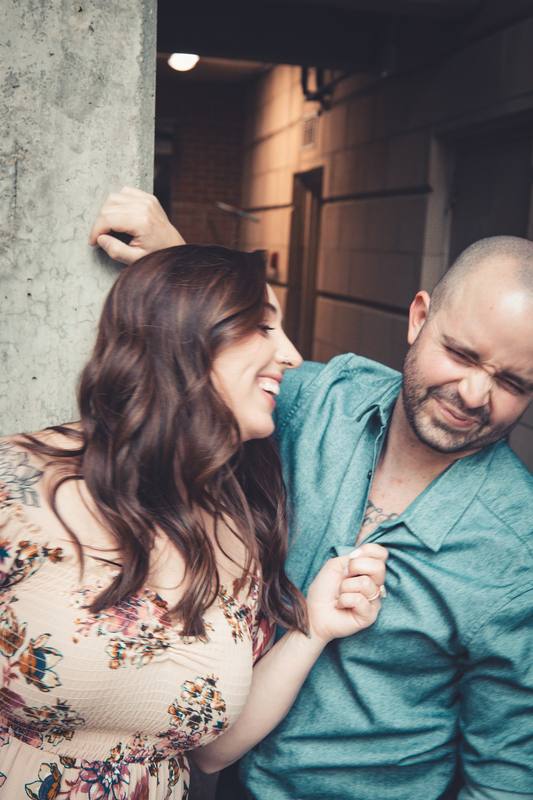
Move three. Whisper. One of you whispers something into the other's ear. Doesn't matter what.
The whispered person reacts. Real smile, real eye crinkle, sometimes a real laugh. That reaction is the photo. The whisperer might be looking down or sideways, which is fine, because we're shooting the reaction, not the whisperer.
Move four. Slow dance with no music. Stand together. One hand on the other person's lower back, one hand held up. Move slowly. Look at each other or look away. Either works.
This handles every "we don't know what to do" moment. It's natural. It moves bodies. It gives hands a job. It's hard to mess up.
A few rules that handle the small stuff
Hands need a job. Holding hands. Holding each other. Holding a coffee cup. Holding a jacket. Anything except dangling at your sides like you're queuing at the DMV.
The forward foot. When standing, one foot slightly forward, weight on the back leg. This automatically makes your hips do something more interesting than a flat-footed stance.
Look at each other 70% of the time. The wedding industry got addicted to couples staring straight into the lens, both smiling. That frame works once per shoot. The other 90% should be you two looking at each other.
Don't pose your face. Posing your body is fine. Posing your face is when you start to look stiff. If you feel yourself "doing a smile," walk three steps in any direction and start over.
What a working photographer does in real time
We'll prompt you. Constantly. "Walk toward each other slowly. Stop here. Touch foreheads. Now whisper something to him. Now laugh. Now look at me for one frame."
Your job is just to follow the prompts and trust that the rhythm is going somewhere. The photographer's job is to keep the prompts coming so you never have to sit in the silence wondering what to do next.
Our take
You don't need to be good at this. You need to be willing to look slightly silly for an hour while a stranger asks you to whisper things to your partner.
The frames take care of themselves after that.